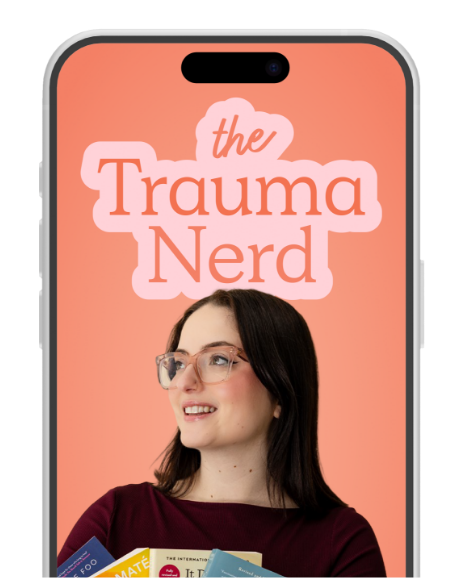

I’m Helen Billows, a trauma psychologist based in Adelaide, South Australia.
I’m a registered psychologist and Adelaide Hills local. If you see me around, I’m probably drinking my eighth coffee for the day, or chasing my toddler around the playground.
I came to trauma work through my early career in alcohol and other drug services, where almost everyone I worked with had a significant trauma history contributing to their problems.
I found it hard only teaching people to cope with the surface issues, while ignoring what was underneath them. That’s what led me to EMDR in 2018, and it’s been the focus of my therapeutic work ever since.
I’ve dedicated myself to staying at the front of this field. This includes specialised trauma and EMDR education, eight years of university study, and a Master of Clinical Psychology completed with a perfect GPA.
I’m a member of the EMDR Association of Australia (EMDRAA) and EMDR International Association (EMDRIA), two of the peak bodies for EMDR internationally.
I hold consultant accreditation through EMDRAA, one of the highest levels of EMDR credentialing available in Australia. Fewer than ten psychologists in South Australia possess this level of qualification. Since 2025 I’ve also been selected by national EMDR training providers to assist in delivering training programs across Australia.
I’m a trauma therapist with a strong EMDR focus. To date, I’ve delivered over 7,000 EMDR sessions. This is my entire clinical focus, not a side interest. I also host The Trauma Nerd podcast, where I offer takes directly from the trauma therapist’s chair.
I’m not interested in staying on the surface and teaching you to cope. I want to help you feel genuinely better, not just function better.

I seriously know trauma

What lights me up about being a trauma therapist
I live for the penny-drop moment.
When the fog of trauma clears, the dysfunctional beliefs and feelings dissipate, and you really feel it for the first time: that you’re worthy, that you’re good enough, that it wasn’t your fault, that you truly did the best you could.
What you see is my face lit up with pride for you. What you don’t see is the “we did it!” dance I do by the coffee machine after you leave.
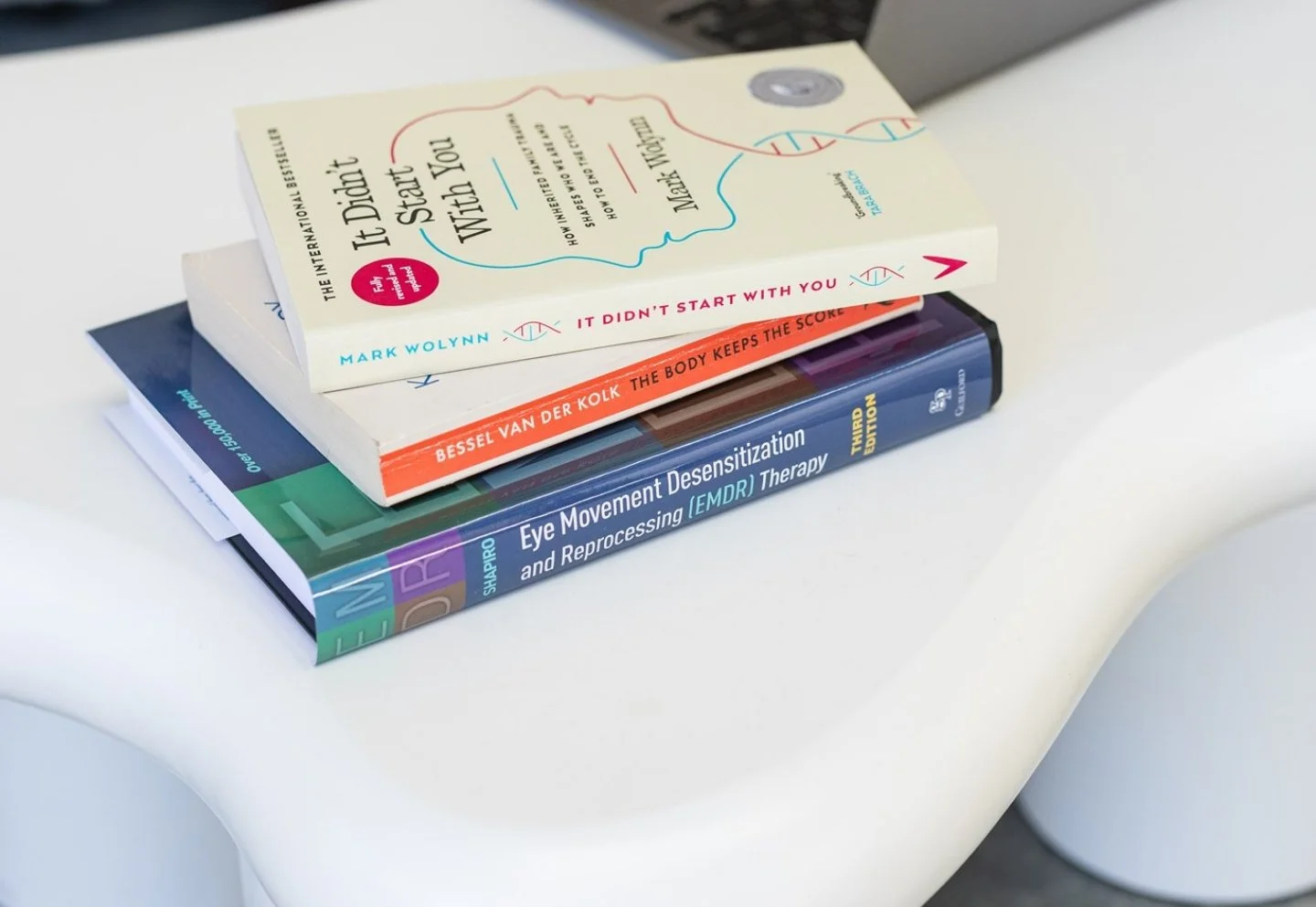
What my approach as a trauma-focused psychologist involves

I’m the most structured go-with-the-flow psychologist you’ll meet.
I know the trauma research and EMDR theory inside out. But I also know that rigidly imposing all of that on the actual human in front of me doesn’t always work.
I bring my full self to sessions: curious, compassionate, cheeky, a bit sweary, and always in your corner.
Once we’ve finished assessment and have a plan, I’m not a “so, tell me about your week?” therapist — I’m a “ready to do more EMDR today?” therapist. There’s always room for what you need to bring, but the goal remains in focus.

We must work as a team. I bring the training, the experience and the framework.
You bring you: your history, your instincts, the things only you know. Inside the EMDR protocol, we use what clinical psychologists call a scientist-practitioner approach:
We hypothesise: our best guess at what past experiences are driving your problem.
We test it: in other words, do therapy/EMDR.
We assess: are you feeling better? What helped, what didn’t? Then we use and apply the data to refine and repeat until you reach your goals.

Through the process, integrity, efficiency and effectiveness are crucial to me.
I’ll respect your time and money by doing the very best I can for you. That includes being honest, even when it’s something you’d rather not hear. And when I hit a problem that stumps me (I’ll begrudgingly admit that I’m a mere mortal and it happens), I’m fantastically stubborn. I’ll dig into the research and literature until I find our answer. I am committed to doing everything I can to help you achieve your goals.
The presentations I see most are complex trauma that doesn’t look like textbook PTSD, childhood trauma showing up as adult anxiety and depression, and people who’ve tried everything and still feel stuck.
A few absolutely crucial things to know about me
I have a serious junk food habit, mostly hot chips (with spicy mayo) and Coke Zero.
I run Family Guy and Bob’s Burgers, my favourite cartoons, on loop while I clean the house.
SEINFELD > FRIENDS. And no, I will not be commenting further!
And I’m a cosy gamer: Animal Crossing, Stardew Valley and Coral Island are my favourites — I have a neurotic need to finish the museum in every game I play, and I cheat by changing the date on my Nintendo Switch so I can catch the rare bugs without waiting until next year.

Not sure yet?
If you’re still working out whether trauma-focused therapy is right for you, my podcast The Trauma Nerd is a good place to start.